Alvin air conditioning repair solutions you can trust are founded on verified diagnostics, not estimates. When your air conditioner produces insufficient air, cycles longer, causes electrical trips, cycles rapidly, or produces water leaks, you require a certified Texas professional to test airflow, air pressure, electrical readings, and refrigerant levels. You should also expect a written proposal detailing parts, labor, and regulatory modifications. The proper company addresses the real fault, restores efficiency, and helps you understand whether fixing or replacing makes more sense.
Critical Takeaways
- Choose an Alvin AC repair company with Texas licensing, liability insurance, and trained technicians to adhere to OEM service procedures.
- Dependable service begins with clear diagnostics, featuring airflow, electrical, and refrigerant analysis, plus a written report before repairs begin.
- Warning signs like weak airflow, warm air, short cycling, unusual noises, or increasing humidity indicate your AC needs prompt inspection.
- Require an itemized proposal including parts, labor, refrigerant, and any compliance or drainage corrections before authorizing work.
- Read reviews for punctuality, accurate troubleshooting, transparent pricing, warranty support, and effective resolution of ongoing AC problems.
When You Need Alvin AC Professional Help
Often, your AC system shows obvious symptoms before it stops working completely. You should arrange Alvin AC repair when air movement falls, vented air turns insufficiently cool, or air conditioning cycles run prolonged than usual. Irregular room temperatures, frequent breaker trips, and unusual vibrations also indicate degrading performance that calls for timely inspection.
You may notice increasing indoor humidity, delayed startup, or frequent on-off cycling. Those indicators often indicate regulation, power, or ventilation faults that a service expert can isolate through control troubleshooting, amperage checks, and airflow testing. Odd odors, grinding sounds, or water around the air handler suggest conditions that can degrade components and decrease efficiency. If your utility costs increase without additional usage, your system typically needs attention. Regular seasonal maintenance allows you spot these faults before failure occurs.
What Causes AC Problems in Alvin?
In Alvin, your AC often experiences failures when contaminated air filters restrict air movement and add system strain. You may also have coolant leaks, which lower cooling capacity, decrease pressure, and can affect essential components if they aren't being repaired promptly. If you discover these factors early, you can stop performance loss, inconsistent cooling, and more significant repair needs.
Filthy Air Filters
Contaminated air filters frequently initiate AC troubles by impeding airflow across the evaporator coil and requiring your system to operate outside its designed pressure and temperature ranges. The airflow limitation reduces heat transfer performance, raises blower workload, and can cause coil icing, short cycling, and uneven supply temperatures throughout your home.
You'll commonly notice diminished vents, extended run times, increased energy consumption, and increased dust accumulation when filter maintenance gets overlooked. A clogged filter can also distort static pressure readings, making diagnostic testing necessary before you assume a more significant mechanical fault exists. You should swap out or clean filters based on manufacturer specifications, occupancy applicable information levels, and indoor air conditions. During service, your technician should check filter sizing, installation direction, cabinet sealing, and pressure drop to verify appropriate system airflow and consistent operation.
Refrigerant Leakage
Refrigerant leaks from your AC system lead to decreased cooling output because the evaporator and condenser cannot sustain the needed pressure levels and saturation temperatures for correct heat exchange. Extended run times, poor supply air, coil icing, or elevated superheat and compressor discharge temperatures are commonly detectable symptoms.
Brazed joints, Schrader cores, service valves, evaporator tubing, or rubbed line sets are where leaks usually develop. Corrosion, vibration, faulty installation, and age accelerate deterioration. Topping off refrigerant without fixing the leak masks the problem and can break code or manufacturer specifications. A qualified technician should perform leak detection with nitrogen pressure testing, electronic instruments, or ultraviolet dye, then execute refrigerant recovery before opening the circuit. Following repairs, evacuation, factory charge weight-in, and validation of proper subcooling and system performance are necessary.
Factors of Lukewarm or Poor Air from Your AC
You're most likely dealing with a clogged air filter, low refrigerant, or leaking ductwork if your AC produces warm or poor air. Restricted airflow usually connects to a clogged filter, while temperature loss may signal a refrigerant charge fault or duct leakage. A proper inspection enables you locate the precise problem and bring back normal system performance.
Plugged Air Filter
Often, a clogged air filter is the most straightforward reason your AC blows warm or weak air because it restricts airflow across the evaporator coil and interferes with normal heat transfer.
Checking the filter first is advisable when troubleshooting weak output from registers. A filter that's visibly dirty creates airflow restriction that can decrease efficiency, extend run times, and strain blower components. When cases are severe, the evaporator coil may get too cold, further reducing performance even more. To verify compliance with manufacturer specifications, check the filter size, MERV rating, and mounting direction. Change disposable filters per schedule, or thoroughly clean reusable ones. Consistent filter maintenance helps restore normal airflow, protects equipment, and supports stable cooling performance.
Concerns With Refrigerant Or Ducts
Apart from air movement restrictions, refrigerant faults and duct malfunctions can also lead to your AC delivering warm or feeble air. When refrigerant charge drops due to leaks, your evaporator is unable to extract adequate heat, so supply temperatures go up and refrigeration capacity decreases. You must not add refrigerant blindly; EPA-compliant technicians must find leaks, address them, and conduct refrigerant recovery before recharging the system to manufacturer specifications.
Duct defects produce comparable symptoms. If treated air exits through separated joints, collapsed runs, or leaking plenums, rooms receive less air movement even when the blower functions normally. You may also have pressure differences that pull hot attic air into return ducts. A technician should check static pressure, close leaks, validate insulation, and complete duct balancing so each register delivers the designed airflow and temperature.
How Alvin Technicians Troubleshoot AC Problems
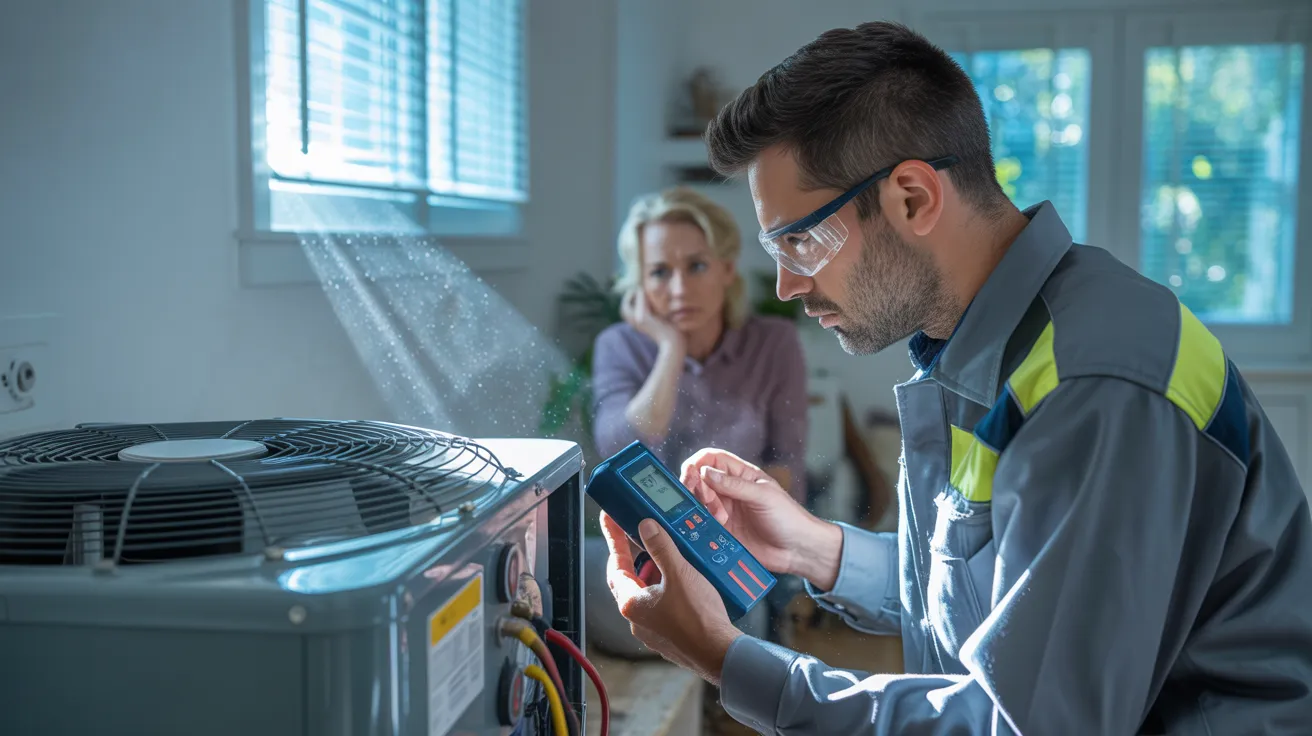
Start with system data and measured performance: a expert in Alvin will confirm thermostat instructions, examine the air filter, and log inlet-outlet temperature split, static pressure, voltage, amperage, and refrigerant readings before making conclusions.
From that baseline, you'll see experts match those values against manufacturer guidelines and local code standards. They utilize diagnostic tools to check capacitors, contactors, relays, blower efficiency, condensate safety controls, and compressor winding condition. They also analyze equipment records, such as previous repairs, repeated fault trends, and service cycles, because histories often expose obscure causes. If airflow is inadequate, they'll locate impediments in ducts, coils, registers, or the blower assembly. If electrical parameters vary, they'll track faulty connections, asymmetry, or controller faults. This organized approach allows you get correct diagnoses, regulation-compliant service, and repairs that fix core causes.
Should You Repair or Replace Your AC?
The choice to repair or replace your AC should be based on verified condition, repair cost, energy consumption loss, and remaining service life—not speculation.
You should assess compressor integrity, refrigerant circuit leakage, blower function, coil condition, and control-board reliability before choosing.
If the failure is isolated and your system cools within manufacturer specifications, repair generally makes sense.
When testing demonstrates repeated component degradation, declining energy efficiency, R-22 dependence, or structural corrosion, replacement is typically the proper option.
You should also examine SEER performance against present standards, confirm duct compatibility, and review warranty transferability if the property changes hands.
A certified load calculation and static-pressure test will show whether your present equipment is appropriately sized.
That data permits you arrive at a sound decision based on performance, risk, and sustained reliability.
What Are the Prices for AC Repair in Alvin?
In Alvin, AC repair prices can vary significantly, but you can pinpoint the projection by evaluating the failed component, assessment reports, refrigerant type, work time, and compliance corrections. A capacitor or contactor replacement typically costs less than a fan motor, electronic board, or evaporator coil fix. If your system uses outdated refrigerant, material costs rise rapidly.
You should also consider leak testing, electrical troubleshooting, air flow measurement, and thermostat calibration, since accurate diagnostics influence total labor. Seasonal pricing can raise rates during high summer demand, and emergency fees apply when you book after-hours or weekend service. Your invoice will rise if the technician must correct unsafe wiring, drain defects, or clearance violations to meet code. Ask for an breakdown estimate so you can evaluate parts, labor, and compliance-related corrections accurately.
How to Pick a Reputable Alvin AC Repair Contractor
Compare Alvin AC repair providers by checking the controls that impact service reliability: Texas licensing, liability insurance, diagnostic protocol, warranty terms, and documented track record with your equipment type. Ensure the company dispatches licensed technicians and complies with manufacturer service procedures.
Secure a written diagnostic report before authorizing repairs. The assessment must detail symptoms, test procedures, measured readings, failed components, and suggested corrective actions. Review warranty coverage for parts and labor, including exclusions and response times. Confirm whether the contractor holds permits, safety training, and compliance records. Examine customer reviews for consistencies involving punctuality, reliable troubleshooting, pricing transparency, and callback resolution. Verify whether the team maintains common parts for your system brand. When you compare these elements objectively, you'll decrease risk and pick a reliable Alvin AC repair service.
Frequently Asked Queries
Do Alvin AC Repair Contractors Offer Urgent or After-Hours Service?
Several Alvin AC repair services deliver urgent or after-hours assistance, allowing you to obtain assistance when your system fails abruptly. You should check continuous response capacity, dispatch reach, and technician licensing ahead of requesting. Reputable providers apply rapid diagnostics to isolate electrical, refrigerant, or airflow issues quickly. You'll also want to check overtime rates, parts inventory, and projected arrival timeframes, so you can make a responsible, knowledgeable service determination.
Are Financing Options Available for Major AC Repairs in Alvin?
Various Alvin AC repair services offer financing for major repairs, but the specifics can alter your total cost. You'll commonly discover payment plans and credit alternatives connected to system diagnostics, repair scope, and approval qualifications. Ahead of you sign, review interest rates, term timeframes, deferred-payment terms, and service warranties. If you study the contract thoroughly, you can avoid compliance problems, protect your budget, and regain cooling without needless financial burden.
How Long Do Most Alvin AC Repair Visits Take?
Most Alvin AC repair appointments take 1 to 3 hours, according to system status, issue complexity, and parts access. You'll notice some appointment variability when technicians conduct diagnostics, check refrigerant levels, test electronic components, or order replacement parts. The usual duration stays briefer for minor fixes like capacitor swaps and longer for compressor, blower, or leak-related repairs. You can decrease delays by supplying system history and ensuring clear equipment access.
Will AC Repairs in Alvin Come With a Service Warranty?
Yes—many AC repairs in Alvin provide a service warranty, but coverage differs greatly by technician and component. You secure protection, yet you must check exclusions. Check whether the service warranty encompasses labor, parts, or only certain diagnostic corrections. Obtain written terms, length, claim procedures, and any limited coverage requirements. You should also ensure if improper maintenance, refrigerant leaks, or previous system faults void protection before authorizing service.
Can Regular Servicing Help You Avoid Future AC Repairs in Alvin?
Regular servicing does assist in preventing future AC repairs in Alvin. Planning seasonal evaluations minimizes wear by discovering refrigerant problems, electrical problems, and restricted airflow in advance. System operation improves through timely filter replacements, coil servicing, and thermostat calibration. Routine unit care minimizes breakdown risk, extends component durability, and fulfills manufacturer requirements. This anticipatory approach helps you avoid high-cost corrective repairs in the future.
Conclusion
When your system shows indicators, timely Alvin AC repair stops small faults from escalating to compressor failures. Restricted airflow on its own can decrease cooling performance by up to 15%, a definite sign of how rapidly minor issues escalate. If you're seeing tepid air, reduced airflow, or repeated cycling, you require a precise diagnosis instead of guesswork. Choose a certified Alvin AC repair company that checks components, establishes root causes, and recommends the most budget-friendly repair or replacement option.